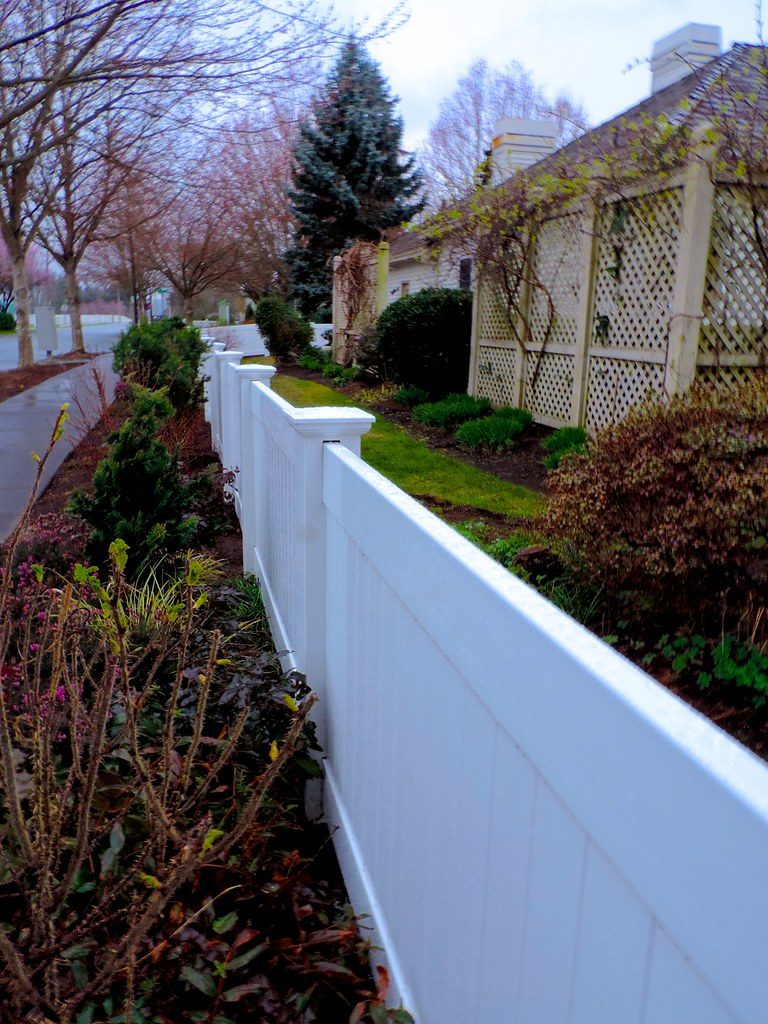
Vinyl has become the default upgrade choice over wood for Fort Myers homeowners within a few miles of the coast, where salt air accelerates the corrosion of metal hardware and the decay of untreated wood. Vinyl doesn’t require repainting or re-sealing, which matters in a climate with this much sun exposure and humidity.
What’s typically included
- UV-stabilized vinyl panels rated for Florida sun exposure
- Reinforced post spacing for wind load in hurricane-prone areas
- Gate hardware rated for coastal humidity
Vinyl panel styles and what they’re used for
Not all vinyl fencing serves the same purpose, and mixing styles on one property is common:
- Solid privacy panels — full-height tongue-and-groove boards with no gaps, used for backyard privacy and pool enclosure screening. This is the most requested style in Fort Myers.
- Picket-style panels — shorter, spaced boards used for front yards where a fence needs to define a property line without blocking the view of the house.
- Semi-privacy (shadowbox) panels — boards alternate front and back on the rail, which allows airflow through the fence while still blocking direct sightlines. A good middle option for windy lots where a full privacy panel acts like a sail.
- Post-and-rail vinyl — open-style fencing typically used for larger side or rear lot lines rather than backyard enclosure.
Panel thickness matters more in Florida than in drier climates: thin, hollow vinyl can flex and rattle in sustained coastal wind, so we spec panels rated for the wind-load requirements in Lee County’s building code rather than the thinner residential-grade vinyl sold at big-box retailers.
Our installation process
- Site walk and layout — we confirm the property line (using the survey if available), mark utility lines through Sunshine 811, and flag any HOA-restricted zones before digging.
- Post spacing and footing — posts are set at intervals matched to the wind-load rating of the panel, with concrete footings sized for Southwest Florida’s sandy soil rather than a fixed generic depth.
- Panel and gate installation — panels are leveled individually rather than assumed uniform, since most residential lots here have some grade variation.
- Hardware and final walkthrough — gate self-closers are installed and tested on any gate adjacent to a pool per Florida’s pool barrier requirements, and we walk the full line with the homeowner before calling the job complete.
Maintenance and care
One of the main reasons homeowners switch to vinyl locally is how little upkeep it needs, but it isn’t zero-maintenance:
- Rinse with a hose a few times a year to clear salt residue if you’re within a few miles of the coast — salt film can dull the surface finish over time even though it won’t cause structural damage.
- Check gate hinges and self-closing hardware every six months; humidity can affect the closing tension even on hardware rated for coastal use.
- Algae and mildew staining is common on the shaded side of a vinyl fence in Florida’s humidity — a diluted bleach-and-water rinse once a year keeps panels from yellowing.
What affects your price
The $30–$60 per linear foot range depends mainly on: total linear footage, number of gates (each gate adds hardware and framing cost), whether the yard requires extra excavation for uneven grade, and panel style — solid privacy panels use more material than picket or semi-privacy styles per foot.
Permits and HOA rules
Lee County requires a permit for most fence installations over 6 feet in height. HOA-governed subdivisions across Fort Myers frequently restrict fence style, height, and even vinyl color — always confirm your neighborhood’s rules before ordering non-standard material or finish. We handle permit filing as part of the project where one is required.
The photo above is a style example illustrating this type of vinyl fencing, not a completed project at a Fort Myers address. Real project photos will be added as local jobs are completed.
Get a quote
Fill out the form on this page or call to schedule a free on-site estimate.